Nvidia CEO’s WEF Vision Signals a Radical Shift: How AI Could Replace Traditional Drug Labs and Redefine Pharmaceutical Research
Nvidia CEO Jensen Huang predicts at the World Economic Forum that AI will transform drug discovery, potentially replacing traditional wet labs with AI-driven platforms that accelerate pharmaceutical research, reduce R&D timelines, and redefine how medicines are developed.
Introduction: A Davos Statement That Shook Drug Discovery
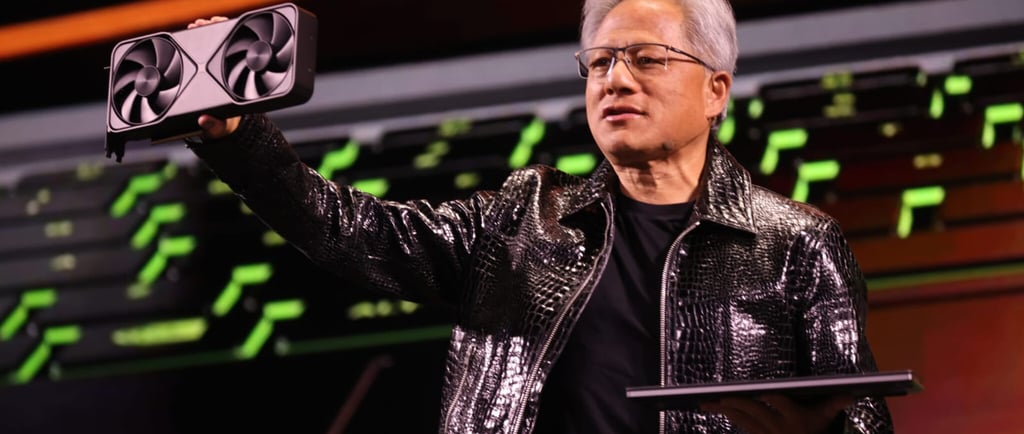
At the World Economic Forum (WEF) in Davos, a bold prediction captured the attention of the global biotech and pharmaceutical community. Jensen Huang, CEO of Nvidia, stated that artificial intelligence is poised to fundamentally transform drug research, potentially supplanting traditional wet laboratories and dramatically accelerating the pace of discovery.
Coming from the leader of the world’s most influential AI hardware and platform company, the statement was more than futuristic optimism—it was a strategic signal. Huang’s remarks suggest that AI-driven platforms may soon become the primary engines of pharmaceutical innovation, shifting drug discovery away from slow, expensive, lab-centric models toward computation-first biology.
This article explores what Huang’s prediction really means, why it matters now, and how AI may reshape drug discovery pipelines faster—and more disruptively—than many in pharma expect.
Context: Why WEF Matters for Pharma and AI
The World Economic Forum is not merely a conference—it is where global economic, technological, and policy narratives are set. When a technology leader uses this platform to forecast disruption, it often signals capital flows, policy alignment, and industry restructuring.
Huang’s comments at WEF did not emerge in isolation. They reflect:
Explosive advances in generative AI
Breakthroughs in protein structure prediction
Rapid scaling of computational biology
Growing frustration with traditional pharma R&D inefficiency
At Davos, AI was framed not as a productivity tool—but as a new scientific infrastructure.
The Core Claim: AI as the New Drug Discovery Lab
Huang’s central thesis can be summarized simply:
“AI will become the laboratory where drugs are discovered.”
This implies a future where:
Hypotheses are generated computationally
Molecules are designed in silico
Failures are filtered before physical experiments
Wet labs validate—not explore—ideas
In this model, AI platforms replace much of the exploratory role of traditional labs, compressing years of trial-and-error into weeks or months.
Why Traditional Drug Discovery Is Ripe for Disruption
The Structural Inefficiency of Pharma R&D
Drug discovery today suffers from deep structural inefficiencies:
Average cost per approved drug exceeds $2–3 billion
Development timelines span 10–15 years
Over 90% of clinical candidates fail
Discovery remains heavily empirical
Wet-lab experimentation dominates early research, where thousands of compounds are synthesized and tested with minimal prior insight.
This brute-force approach is precisely what AI excels at replacing.
What AI Actually Changes in Drug Research
1. From Trial-and-Error to Prediction-First Science
AI systems can now:
Predict protein structures
Model protein–ligand interactions
Simulate binding affinities
Explore massive chemical space
Instead of testing 10,000 compounds experimentally, AI can narrow candidates to dozens of high-probability molecules before any lab work begins [1].
2. AI as a Universal Drug Design Engine
According to Huang’s vision, AI will function as a general-purpose molecular reasoning system, capable of:
Designing drugs for rare diseases
Rapidly responding to emerging pathogens
Customizing therapies for specific populations
This approach treats drug discovery as a computational optimization problem, not a purely biological one.
Nvidia’s Strategic Position in AI-Driven Biology
Nvidia is not a passive observer in this transformation.
Its GPUs and AI platforms already power:
Protein structure modeling
Molecular dynamics simulations
Large-scale biological foundation models
Generative chemistry systems
By positioning AI as the “new lab,” Nvidia effectively positions itself as the infrastructure provider for next-generation drug discovery.
This is analogous to how cloud platforms replaced on-premise servers—except now, the target is biomedical research itself.
Can AI Really Replace Wet Labs?
The Short Answer: Not Completely—but Substantially
Despite the bold rhetoric, AI will not eliminate wet labs overnight. Instead, it will redefine their role.
What AI Can Replace:
Early-stage hypothesis generation
Compound screening
Target prioritization
Lead optimization
What Wet Labs Will Still Do:
Biological validation
Toxicology studies
Manufacturing process development
Clinical testing
In essence, labs move downstream, becoming validation engines rather than discovery engines.
Acceleration Effects: Why Timelines May Collapse
Discovery Timelines Are the Biggest Opportunity
Huang emphasized that AI’s greatest impact will be on time, not just cost.
AI-driven platforms can:
Reduce target identification from years to weeks
Shorten lead optimization cycles dramatically
Eliminate dead-end programs earlier
This could compress drug discovery timelines by 30–70%, even if clinical trials remain unchanged [2].
For pharma companies facing patent cliffs, this acceleration is existential.
Implications for Pharma Companies
1. Competitive Advantage Shifts to Compute + Data
Future competitive advantage may depend less on:
Lab size
Headcount
Physical infrastructure
And more on:
Data quality
AI model sophistication
Compute scale
Platform integration
Companies that fail to adopt AI-native discovery risk becoming structurally uncompetitive.
2. M&A Will Follow the AI Curve
Pharma companies may increasingly acquire:
AI-first drug discovery startups
Computational biology platforms
Data-rich biotech firms
Rather than traditional single-asset biotechs.
Implications for Biotech Startups
For startups, Huang’s vision is both an opportunity and a warning.
Opportunities:
Lower barriers to entry
Faster proof-of-concept generation
Platform-based valuations
Risks:
Commoditization of discovery tools
Winner-takes-most dynamics
Heavy dependence on compute providers
The most successful startups will combine AI depth with disease-specific biological insight.
Investor Perspective: Hype vs Reality
While AI-driven drug discovery has attracted massive funding, investors are becoming more discerning.
Key questions now include:
Does the AI platform translate into clinical success?
Is the value in the platform or the pipeline?
How defensible is the model without proprietary data?
Huang’s comments validate the long-term thesis, but they also raise expectations for real-world outcomes.
Regulatory and Ethical Considerations
Regulators remain cautious but open.
Challenges include:
Explainability of AI-designed molecules
Validation of AI-driven decisions
Accountability for model errors
However, agencies globally are signaling willingness to adapt—as long as patient safety remains central [3].
A Paradigm Shift, Not a Silver Bullet
Perhaps the most important takeaway from Huang’s WEF remarks is this:
AI will not eliminate biology—it will change how we engage with it.
Drug discovery will increasingly resemble engineering, where biological systems are modeled, simulated, and optimized computationally before physical testing.
This is not the end of wet labs—it is the end of blind experimentation.
Looking Ahead: What the Next 5 Years May Bring
By 2030, we may see:
AI-designed drugs reaching approval at scale
Discovery timelines cut in half
Pharma R&D teams reorganized around AI platforms
Wet labs operating as validation hubs
Companies that adapt early will lead. Those that resist may struggle to survive.
Conclusion: Davos Signals the Beginning of a New Drug Discovery Era
Jensen Huang’s prediction at the World Economic Forum was not a speculative soundbite—it was a directional statement about the future of science.
AI platforms are poised to become the primary engines of drug discovery, transforming how medicines are designed, tested, and delivered. While traditional labs will not disappear, their dominance is ending.
For pharma, biotech, investors, and policymakers, the message is clear:
The future of drug discovery will be written in code before it is proven in the lab.
References
Industry analyses on AI-driven molecular screening and structure-based drug design
Studies on drug discovery timeline compression using AI platforms
Regulatory commentary on AI-designed therapeutics and model governance
WEF 2026 discussions on AI, healthcare, and life sciences transformation
Semiconductor and AI infrastructure impact reports on biomedical research