FDA Accelerates Adoption of AI in Drug Development as Submissions Rise and New Guidance Signals a Regulatory Shift
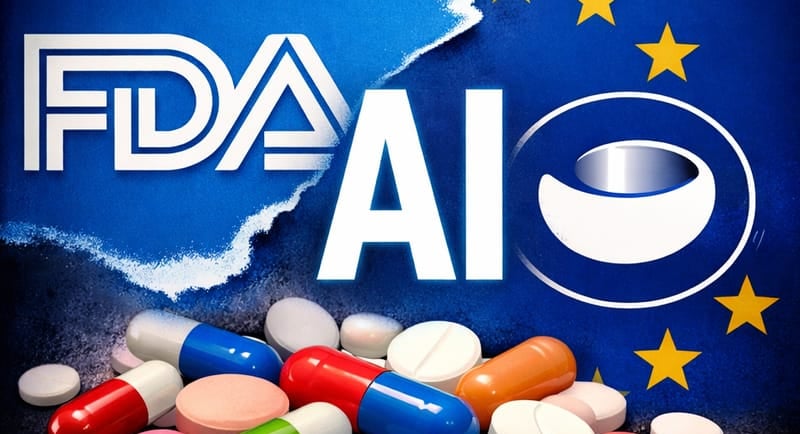
FDA and drug developers are increasingly using AI in drug development, with rising regulatory submissions and new draft guidance outlining responsible AI use, signaling a major shift in how artificial intelligence is integrated into pharmaceutical research and regulatory science.
Introduction: AI Moves From Experimental Tool to Regulatory Reality
Artificial intelligence is no longer operating on the fringes of pharmaceutical research. In 2026, AI has entered the regulatory mainstream, as both drug developers and regulators increasingly integrate AI into drug discovery, development, and review processes.
The U.S. Food and Drug Administration has reported a steady rise in regulatory submissions that include AI-generated data, while simultaneously releasing draft guidance on the responsible use of AI in drug development. Together, these developments signal a pivotal transition: AI is shifting from an optional innovation tool to a regulated, governable component of modern drug development.
This article examines how AI is being used across the drug development lifecycle, why FDA submissions involving AI are increasing, what the new draft guidance means for industry, and how this regulatory evolution may shape the future of pharmaceutical innovation.
The Rising Use of AI Across Drug Development
From Discovery to Regulatory Review
AI adoption in pharma is no longer limited to early-stage discovery. Developers are now deploying AI across nearly every phase of the drug lifecycle, including:
Target identification and validation
Molecular design and optimization
Preclinical toxicity prediction
Clinical trial design and patient stratification
Manufacturing quality control
Regulatory data analysis
As a result, FDA reviewers are encountering AI-derived insights far more frequently in IND, NDA, and BLA submissions than in previous years [1].
Why AI Submissions Are Increasing So Rapidly
1. Maturation of AI Platforms
Earlier AI models were often experimental, opaque, and difficult to validate. Today’s systems are:
More interpretable
Better validated with real-world data
Integrated with laboratory and clinical workflows
This maturation has increased developer confidence in submitting AI-supported evidence to regulators.
2. Pressure to Improve R&D Efficiency
Drug development remains slow, expensive, and failure-prone. AI offers measurable advantages:
Reduced candidate attrition
Better-informed go/no-go decisions
Faster iteration cycles
As competitive pressure intensifies, companies increasingly view AI as a necessity rather than a luxury [2].
3. Regulatory Openness Has Improved
FDA’s public acknowledgment of AI use—and its move to issue guidance—has lowered uncertainty. Developers now have clearer signals that AI-enabled approaches are acceptable, provided they meet scientific and ethical standards.
FDA Draft Guidance: A Signal, Not a Rulebook
The FDA’s draft guidance on AI use in drug development is not a rigid regulatory framework. Instead, it functions as a principles-based roadmap.
Core Themes in the Draft Guidance
The guidance emphasizes:
Transparency in AI model development
Explainability of outputs used in decision-making
Data integrity and bias mitigation
Human oversight in critical decisions
Lifecycle monitoring of AI systems
Rather than approving or rejecting specific algorithms, the FDA focuses on how AI is developed, validated, and governed [3].
Responsible AI: What Regulators Actually Care About
Contrary to common fears, regulators are not hostile to AI. Their concerns are practical and patient-centric.
Key Regulatory Questions
When reviewing AI-supported submissions, regulators increasingly ask:
Can the AI’s role be clearly explained?
Is the training data appropriate and unbiased?
Are predictions reproducible?
How is model drift monitored over time?
Who is accountable for AI-driven decisions?
The emphasis is not on how advanced the AI is—but on how reliable and controllable it is.
Where AI Is Having the Biggest Regulatory Impact
1. Drug Discovery and Candidate Selection
AI-generated targets and molecules are now appearing in IND submissions with detailed documentation of:
Model architecture
Training datasets
Validation experiments
This represents a shift from discovery secrecy to regulatory transparency.
2. Clinical Trial Design
AI is increasingly used to:
Identify patient subpopulations
Optimize inclusion and exclusion criteria
Predict enrollment rates
Reduce trial size while preserving statistical power
These applications directly affect trial outcomes and therefore draw close regulatory scrutiny [4].
3. Manufacturing and Quality Control
AI-driven analytics are being used in:
Process optimization
Real-time quality monitoring
Deviation detection
Because manufacturing errors can directly impact patient safety, AI use here is regulated particularly tightly.
Industry Response: Cautious Acceleration
Pharmaceutical companies are responding to FDA signals with measured enthusiasm.
Strategic Shifts Underway
Many companies are now:
Establishing internal AI governance committees
Documenting AI workflows for regulatory review
Investing in explainable AI tools
Training regulatory teams in AI literacy
The goal is no longer just innovation—but compliance-ready innovation.
Implications for AI-First Drug Developers
For AI-native biotech startups, the FDA’s stance carries both opportunity and responsibility.
Opportunities
Clearer regulatory pathways
Increased credibility with investors and partners
Faster acceptance of AI-derived data
Responsibilities
Robust documentation
Conservative claims
Strong experimental validation
Startups that treat regulation as an afterthought risk delays, clinical holds, or rejection [5].
A Shift in the FDA’s Own Capabilities
The FDA is not merely reacting—it is evolving.
Internal AI Adoption
The agency is increasingly using AI internally for:
Literature screening
Safety signal detection
Inspection prioritization
Review workload optimization
This internal use strengthens the FDA’s ability to evaluate AI-generated submissions intelligently, reducing the knowledge gap between regulator and innovator.
Global Implications: A Template for Other Regulators
FDA guidance often shapes global regulatory norms. As AI governance frameworks mature in the US, other agencies are likely to follow with:
Harmonized AI validation standards
Shared expectations for transparency
Coordinated approaches to AI lifecycle management
This could reduce regulatory fragmentation and encourage responsible global AI adoption in pharma.
The Balance FDA Is Trying to Strike
The FDA faces a delicate balancing act:
Move too slowly → stifle innovation
Move too quickly → risk patient safety
The current approach—principles-based guidance combined with case-by-case evaluation—suggests the agency is aiming for controlled acceleration, not unrestrained disruption.
What This Means for the Future of Drug Development
As AI becomes embedded in regulatory submissions, several long-term changes are likely:
AI literacy becomes a core competency in pharma R&D
Regulatory submissions become more data-rich and complex
Drug development timelines shorten selectively, not universally
Trust shifts from intuition-driven decisions to evidence-driven models
In effect, AI is becoming part of regulatory science itself, not just a tool used by sponsors.
Conclusion: AI Has Crossed the Regulatory Threshold
The growing number of AI-enabled FDA submissions and the release of draft guidance mark a turning point. Artificial intelligence is no longer experimental in drug development—it is institutionalized.
By emphasizing responsible use, transparency, and human oversight, the FDA is sending a clear message:
AI is welcome—but it must earn trust through rigor, not hype.
For drug developers, this moment represents both validation and obligation. Those who align innovation with governance will lead the next era of pharmaceutical development. Those who do not may find that even the smartest algorithms cannot bypass regulatory reality.
References
FDA reporting on increased AI inclusion in regulatory submissions
Industry analyses on AI adoption across drug development stages
FDA draft guidance on responsible AI use in drug development
Clinical trial optimization studies using AI-based methodologies
Regulatory case studies involving AI-supported IND and NDA reviews