
China Emerges as a Global Biotech Powerhouse While Europe Risks Falling Behind and the US Faces Regulatory Friction
China is rapidly rising as a global biotech innovation powerhouse, while Europe risks falling behind due to fragmentation and the US remains central but faces increasing regulatory and cost pressures shaping the future of global biopharmaceutical development.
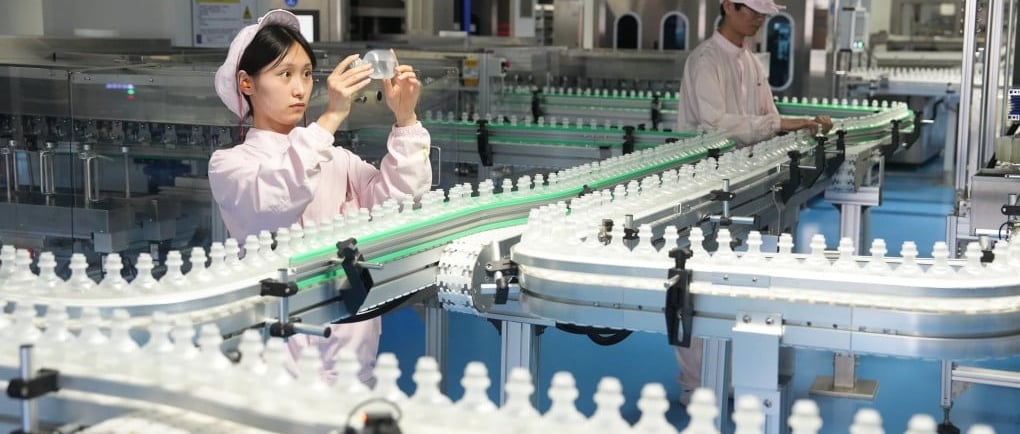
Introduction: A Global Biotech Power Shift Is Underway
The global biotechnology landscape is undergoing a structural realignment. Once dominated almost exclusively by North America and Europe, innovation is now increasingly multi-polar, with China rising rapidly as a biotech innovation powerhouse. At the same time, Europe risks losing competitive ground, while the United States remains the world’s most influential biotech hub—albeit under growing regulatory and cost pressures.
This shift is not speculative. It is visible in clinical trial volume, capital deployment, deal flow, manufacturing scale, and regulatory speed. Together, these forces are reshaping where drugs are discovered, developed, and commercialized in 2026 and beyond.
This article examines why China’s biotech ecosystem is accelerating, why Europe is struggling to keep pace, and why the US—despite its dominance—faces structural challenges that could alter its long-term leadership.
China’s Biotech Rise: From Fast Follower to Innovation Engine
Beyond Generics and Manufacturing
For years, China’s role in biopharma was associated primarily with:
Active pharmaceutical ingredient (API) manufacturing
Contract research and development
Fast replication of Western drugs
That era is ending.
Today, China is producing first-in-class and best-in-class assets, particularly in:
Oncology (including cell therapy and bispecifics)
Autoimmune and inflammatory diseases
Metabolic disorders
RNA-based therapeutics
Chinese biotechs are no longer just cost-competitive—they are scientifically competitive [1].
Structural Advantages Fueling China’s Momentum
1. Speed of Execution
China’s biotech ecosystem is optimized for rapid iteration:
Faster trial initiation
Large, treatment-naïve patient populations
High trial enrollment rates
Compressed development timelines
This allows companies to move from discovery to proof-of-concept significantly faster than many Western peers.
2. Capital Alignment and Industrial Policy
China benefits from:
Coordinated public–private investment
Strong regional biotech clusters
Long-term strategic focus on life sciences
Rather than fragmented funding cycles, capital is often deployed with national strategic alignment, supporting scale-up and continuity [2].
3. Regulatory Pragmatism
China’s regulatory environment has evolved rapidly. Authorities now:
Accept global clinical data
Encourage innovative trial designs
Enable faster conditional approvals
This has made China not only a place to run trials—but a launch market for innovative drugs.
Exporting Innovation: China’s Growing Global Footprint
Chinese biotech companies are increasingly:
Licensing assets to global pharma
Advancing drugs into multinational trials
Competing head-to-head with Western pipelines
Deal values and asset quality have improved markedly, challenging the outdated perception that China produces “local-only” innovation [3].
Europe’s Risk: Strong Science, Weak Translation
Europe’s Enduring Strengths
Europe still boasts:
World-class academic research
Strong clinical expertise
Leading translational science hubs
However, these strengths are increasingly under-leveraged.
The Core Problem: Fragmentation
Europe’s biotech ecosystem is hampered by:
Fragmented capital markets
Nationalized regulatory processes
Inconsistent reimbursement frameworks
Slower scale-up pathways
As a result, many European innovations are either:
Acquired early by US companies
Relocated for later-stage development
Commercialized outside Europe
Europe risks becoming a discovery engine without ownership of outcomes [4].
Talent and Capital Drain
Europe is also experiencing:
Founder migration to the US
Venture capital concentration outside the EU
Delayed growth rounds for scaling companies
Without structural reform, Europe may struggle to retain its most ambitious biotech companies.
The United States: Still the Global Anchor—With Growing Friction
Why the US Still Leads
Despite challenges, the US remains the center of gravity for global biotech:
Deepest capital markets
Mature venture ecosystem
Integrated academia–industry pipelines
Strong commercial infrastructure
Most global biotech deals are still priced, structured, or finalized with US benchmarks in mind.
Rising Pressures on the US Model
However, the US system is under strain.
1. Regulatory Complexity
While scientifically rigorous, US regulation has become:
Slower in certain review pathways
More documentation-heavy
Less predictable for novel modalities
This increases development costs and timelines [5].
2. Pricing and Reimbursement Uncertainty
Growing scrutiny of drug pricing has introduced:
Commercial uncertainty
Political risk
Long-term margin pressure
For innovators, this complicates late-stage investment decisions.
3. Cost Inflation
The US remains the most expensive place to develop drugs, driven by:
Trial costs
Labor expenses
Manufacturing overhead
This has pushed some early-stage development offshore, even for US-based companies.
A Three-Pole Biotech World Is Emerging
Rather than one dominant region, biotech is evolving into a three-pole system:
China: Speed, scale, and increasingly original innovation
United States: Capital depth, global commercialization, regulatory gold standard
Europe: Scientific excellence with translational bottlenecks
Companies are increasingly designing hybrid strategies, such as:
Discovery in Europe
Early trials in China
Late-stage development and launch in the US
This globalized approach is becoming the new normal.
Implications for Pharma Companies
Large pharmaceutical companies are adapting by:
Expanding R&D footprints in China
Licensing Chinese assets earlier
Rebalancing investment across regions
Those who fail to engage with China’s innovation engine risk missing high-quality, cost-efficient pipelines.
Implications for Biotech Founders
For founders, geography is now a strategic decision.
Key considerations include:
Where can trials move fastest?
Where is capital most patient?
Where is regulatory risk lowest?
Where is exit value maximized?
China’s rise expands options—but also intensifies competition.
What Europe Must Do to Stay Relevant
To avoid losing ground, Europe may need to:
Harmonize biotech regulation
Deepen late-stage capital pools
Simplify cross-border trials
Accelerate reimbursement decisions
Without these changes, Europe risks being structurally sidelined in the next decade of biotech growth.
Conclusion: Biotech Innovation Is No Longer Western-Centric
China’s emergence as a biotech innovation powerhouse marks a turning point. Europe’s struggles highlight the cost of fragmentation, while the US—though still dominant—faces pressures that could erode its advantage if left unaddressed.
The future of biotech will not be defined by a single geography. It will be shaped by who can innovate fastest, scale smartest, and navigate regulation most effectively.
In that race, China is no longer catching up—it is competing at the front.
References
Industry analyses on China’s transition from generic manufacturing to innovative biotech
Reports on Chinese biotech capital deployment and industrial policy
Global licensing and deal flow data involving Chinese biotech companies
European biotech ecosystem and funding structure assessments
US regulatory and reimbursement impact studies on biopharma innovation